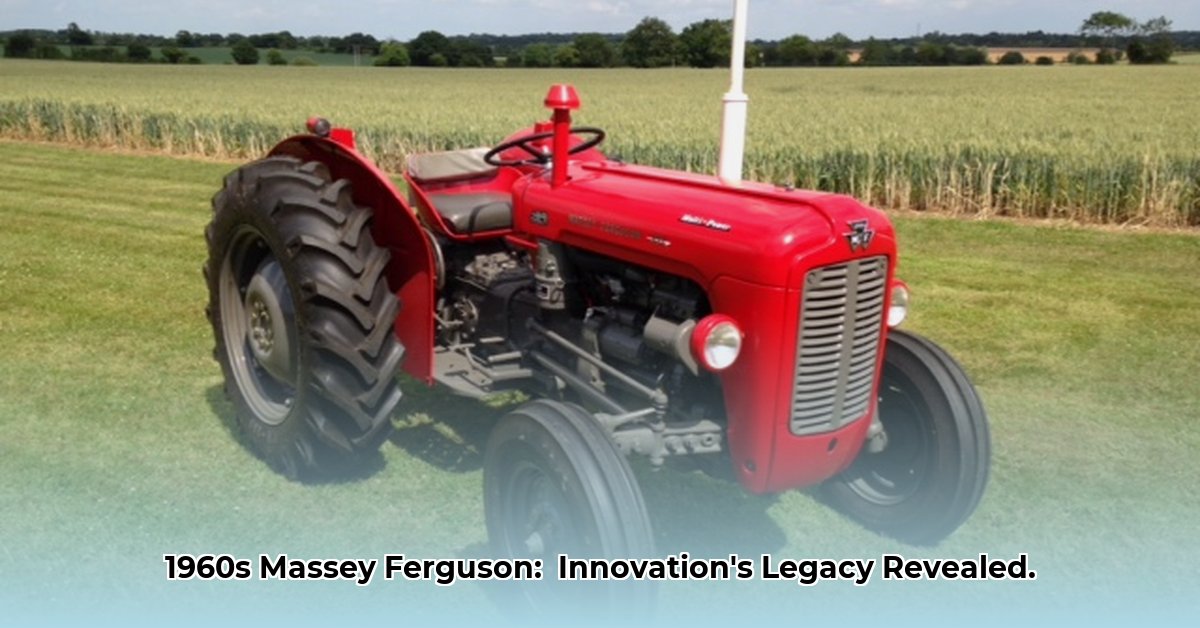
The Massey Ferguson 65 tractor, a workhorse of the 1960s, wasn't just another farm machine; it symbolized a pivotal moment in agricultural history. This article explores its technical specifications, historical context, and legacy, analyzing its contribution to – and limitations regarding – sustainable agriculture. Did this iconic tractor truly pave the way for modern sustainable practices, or is its impact more nuanced? Let's investigate. For more information on Massey Ferguson tractor models, see this helpful resource.
A Closer Look: Engineering the 1960s Harvest
The Massey Ferguson 65 offered farmers a significant boost in power and efficiency. Available with gasoline or diesel engines (internal combustion engines converting fuel into mechanical power), it provided the muscle needed for demanding tasks. Its innovative hydraulic system (a system using pressurized liquid to transmit power) simplified implement attachment and operation, reducing the physical strain on farmers. This was a substantial advancement over previous models, significantly impacting daily farm workloads. But how did its capabilities compare to, say, the horse-drawn plow of previous generations? The difference was transformative.
The Agricultural Revolution: A Changing Landscape
The 1960s witnessed a rapid shift in farming. Mechanization was accelerating, leading to larger farms and dramatically increased yields. The MF 65's reliability and versatility were crucial to this transformation. Farmers needed dependable equipment, and the MF 65 delivered. Its robustness directly supported farmers' livelihoods in this period of profound agricultural change. It wasn't merely about increased horsepower; it was about dependability during a time of critical agricultural transition. What challenges did farmers face in transitioning to these new technologies, and what benefits did they gain? The answer lies in the blend of risk and reward inherent in adopting new agricultural machinery.
Sustainability: A 1960s Perspective
Evaluating the MF 65's sustainability from a modern lens requires understanding its historical context. While fuel efficiency was a concern, environmental impact wasn't a primary design consideration as it is today. Nevertheless, the MF 65 represented a major shift—from manual labor to mechanized farming, profoundly altering the human relationship with Earth's resources. The transition, while increasing productivity, introduced new environmental trade-offs. How did the increased efficiency of this tractor impact resource consumption at the time? This is a pivotal question in understanding the broader context of its environmental effects.
Then and Now: A Technological Comparison
Comparing the MF 65 to modern Massey Ferguson tractors highlights the significant advancements in agricultural technology and our understanding of sustainability:
| Feature | Massey Ferguson 65 (1960) | Modern Massey Ferguson Tractor |
|---|---|---|
| Engine Type | Gasoline or Diesel | Primarily advanced diesel, with increasing exploration of biofuels and hybrid/electric options |
| Fuel Efficiency | Relatively low | Significantly improved through advanced engine design and precision farming techniques |
| Emission Controls | Minimal to none | Sophisticated systems (DPF, SCR) meet stringent environmental regulations |
| Manufacturing Processes | Traditional methods | Emphasis on sustainable materials and environmentally friendly production processes |
A Lasting Legacy: Shaping the Future of Farming
The 1960 Massey Ferguson 65, more than just a tractor, symbolizes a crucial moment in agricultural history. It represents a transition point: a time when mechanization was accelerating, while the long-term implications for sustainability were still being explored. Its influence continues to be felt today in the focus on modern, sustainable agricultural practices. Though the understanding of specific environmental impact requires further contextual analysis, it underscores the continuous improvement needed toward a more sustainable future. The MF 65 is a testament to the ongoing evolution of agricultural machinery and our quest for more environmentally friendly practices.
Three Pivotal Points:
- The MF 65's introduction marked a significant increase in agricultural efficiency and productivity during a period of rapid mechanization.
- Its design, while revolutionary for its time, lacked the environmental considerations that are central to modern agricultural machinery.
- The MF 65's legacy highlights the ongoing need for innovation in agricultural technology to create a more sustainable future for farming.